by
by 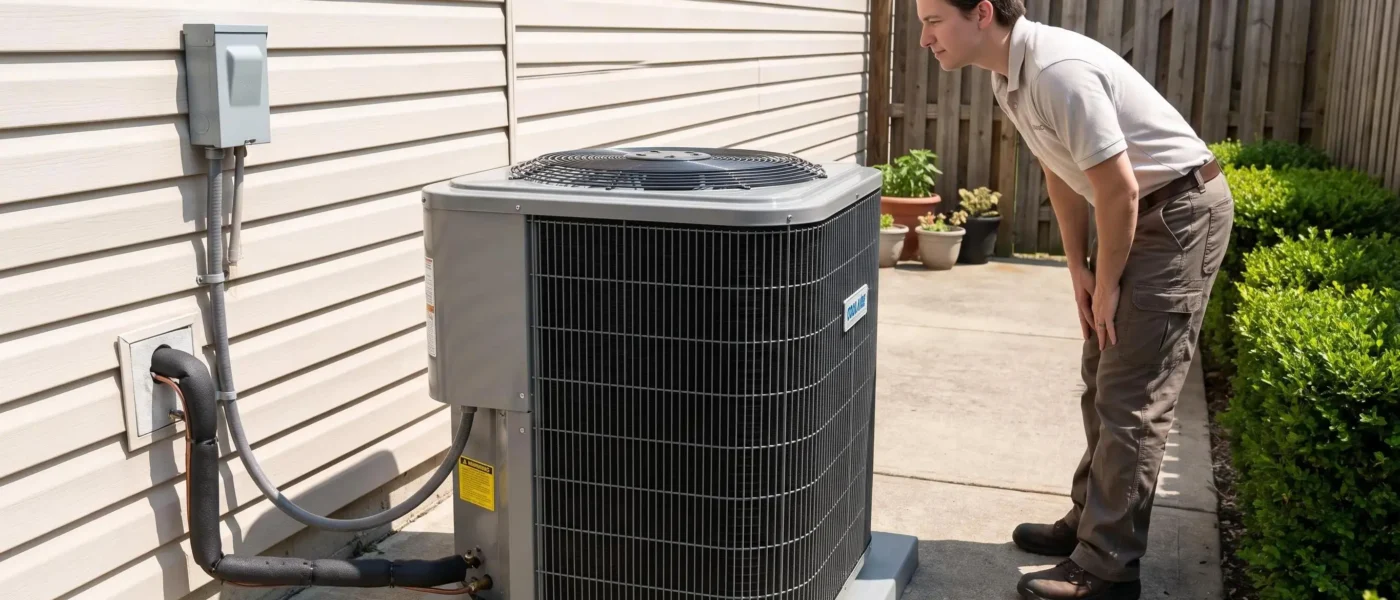
A sudden rattle or squeal can turn a normal Austin afternoon into a shut-it-off-now problem. An air conditioner making noise is not always failing, but the wrong sound can get expensive fast.
What matters is where the noise starts, when it happens, and whether the system still cools. Don’t keep restarting a unit that bangs, grinds, or hums without starting.
Listen for these details before you call:
- Noise loudest at the indoor air handler or outdoor condenser
- Sound only at startup, shutdown, or through the whole cycle
- Warm air, shaking, or a burning smell alongside the noise
What a Healthy Air Conditioner Should Sound Like
If your air conditioner making noise has you on edge, start here: AC systems are not supposed to be silent. A healthy unit usually makes a low hum, steady airflow sound through the vents, and one click when it starts or stops. That’s normal equipment doing its job.
The outdoor unit is usually louder than the indoor side. That’s where the compressor and condenser fan do the heavier work, so some mechanical sound outside is expected. On a really hot Austin afternoon, the whole system may sound a little more strained simply because it’s working longer and harder to pull the temperature down.
The important question isn’t “Is it making any sound at all?” It’s “Has the sound changed?”
A normal sound becomes a problem when it gets sharper, louder, more repetitive, or starts showing up with other symptoms like:
- weak airflow
- warm air from the vents
- visible shaking or vibration
- trouble starting
- cooling cycles that don’t feel right
That’s the line we use in the field. Noise by itself can be harmless. A changed noise usually isn’t.
First, Figure Out Whether the Noise Is Coming From the Indoor or Outdoor Unit
Before anyone touches a tool, narrow down where the sound is coming from. That simple step saves time and usually points the diagnosis in the right direction.
Stand near the indoor air handler first. Then step outside near the condenser. Listen for where the sound is strongest. Don’t overthink it. You’re just trying to answer one practical question: is this happening inside, outside, or both?
That matters because the location changes the list of likely causes.
If the noise is louder indoors
Indoor noises often trace back to things like:
- the blower motor
- a dirty filter restricting airflow
- loose ductwork or vent covers
- drain issues near the air handler
A whistle or hiss inside can be duct related. A squeal indoors often points to blower wear. A rattle near a closet unit can be as simple as a vibrating panel, or not.
If the noise is louder outdoors
Outside, the list shifts:
- condenser fan problems
- compressor trouble
- electrical parts like capacitors or contactors
- leaves, twigs, or small debris around the cabinet
A rattling outdoor unit might be nothing more than debris bouncing around after the fan kicks on. Or it might be hardware loosening up. The sound alone doesn’t tell the whole story, but the location gets you closer.
Timing helps too. Write down when it happens:
- only at startup
- throughout the cooling cycle
- only at shutdown
- only when the system is struggling to cool
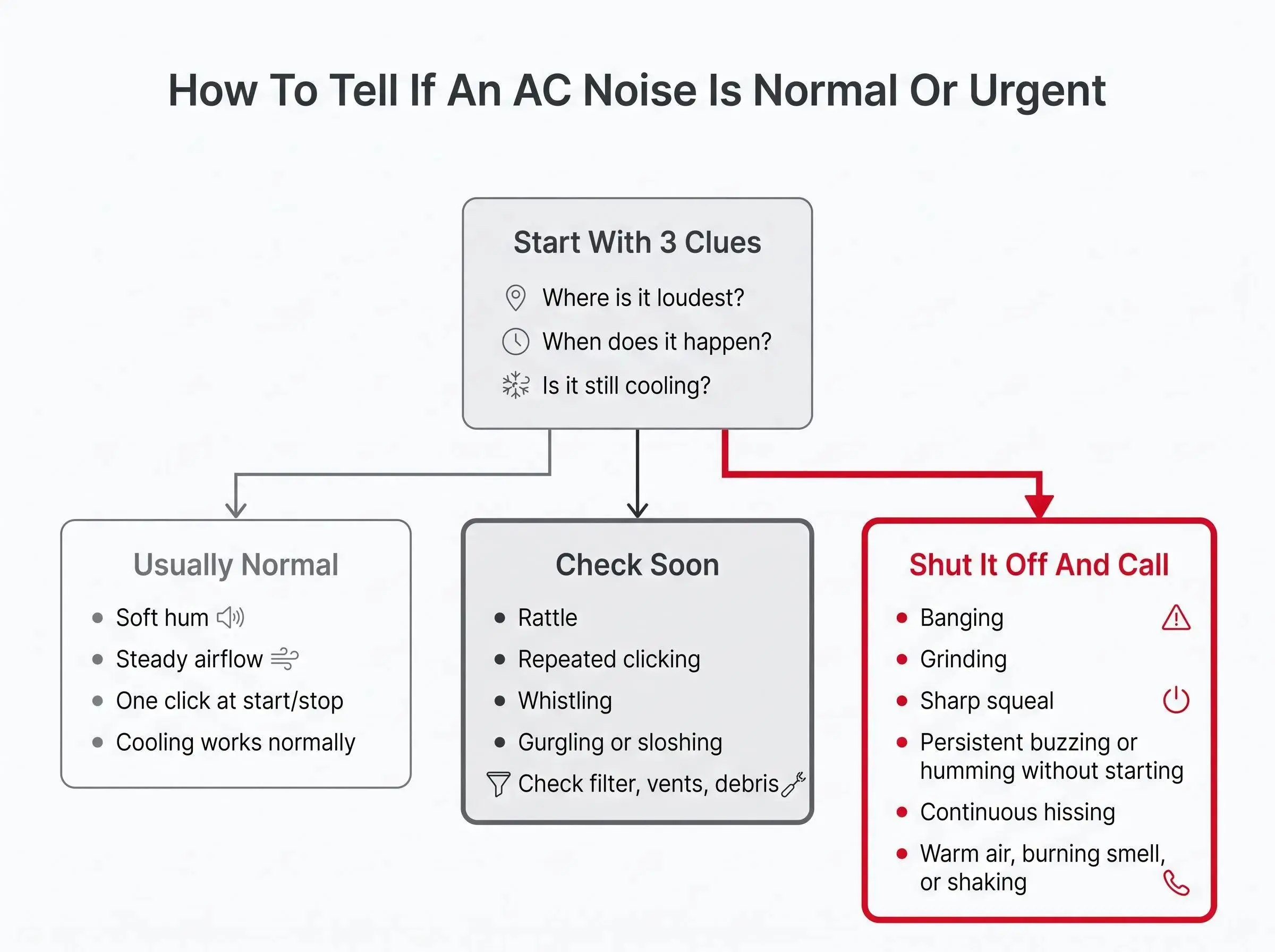
Before you call, note three things:
- what the sound resembles
- where it is loudest
- when it happens
That’s the kind of information that makes diagnosis faster, especially when the noise isn’t constant.
If the outdoor unit is easy to access, it’s reasonable to look for visible debris around the cabinet. Don’t open panels. Don’t reach into the fan area. Just look.
Which AC Noises Mean Shut It Off Right Away
Some sounds buy you time. Others don’t. You don’t need to panic, but you do need an urgency filter.
If you hear loud banging, grinding, a sharp squeal, persistent buzzing or humming that isn’t normal startup, or continuous hissing, shut the system off. Use the thermostat first. If it won’t stop or keeps trying to restart, use the breaker.
If it sounds mechanical, electrical, or pressurized, don’t keep “testing it.”
The reason is simple. Running a damaged motor, stressed capacitor, failing fan assembly, or refrigerant related problem can turn a repairable issue into a much bigger one.
The noise gets more urgent if it’s paired with any of these:
- warm air from the vents
- no cooling at all
- a burning smell
- repeated failed starts
- oily residue around the outdoor unit
That last one matters more than people think. Oil around the compressor area can point to refrigerant trouble, and that’s not a wait-and-see situation.
In Austin heat, delay gets expensive fast. If a unit is already making a serious noise and still running through triple digit weather, the system can go from “we caught it early” to “now the whole building is hot” in a hurry. For homes, that’s miserable. For businesses, it can affect staff, customers, inventory, or temperature sensitive spaces.
This is where same-day diagnosis makes sense. Not because every noise is catastrophic, but because the bad ones usually get worse under load.
What Common AC Sounds Usually Mean
A good sound guide should help you sort nuisance from warning sign. Here are the noises we tell people to pay attention to.
Clicking air conditioner
A single click when the system starts or shuts down is often normal. That’s usually a relay or control component doing what it’s supposed to do.
Repeated clicking is different. Rapid clicking, constant clicking, or a clicking air conditioner that never actually starts can point to a control issue, relay trouble, or a failing electrical part. If the clicking happens with poor cooling, the outdoor unit may be trying and failing to engage correctly.
One clean click is fine. A machine gun click isn’t.
Buzzing or humming
A soft hum during operation can be normal. A louder buzz usually isn’t.
Buzzing often points to loose wiring, a failing capacitor, contactor issues, debris interference, or simple vibration getting worse as parts loosen. If the unit hums but won’t start, a motor or capacitor may be straining. Keep running it like that and you can make the repair bigger.
Rattling outdoor unit
A rattling outdoor unit is often one of the more fixable sounds, but don’t ignore it. It can mean:
- loose screws or access panels
- mounting hardware backing off
- fan adjacent parts vibrating
- leaves, pebbles, or twigs getting knocked around
External debris is one thing. Internal looseness is another. If the rattling continues after a basic visual cleanup around the cabinet, it needs a closer look.
Banging noise from AC
A banging noise from AC equipment is more serious than a light rattle. That usually points to a part that has loosened, shifted, or started failing mechanically.
Possible causes include a damaged fan component, internal compressor wear, or a part that is no longer staying where it should under operation. Banging from the outdoor unit gets expensive fast if the compressor is involved.
Don’t keep restarting a unit just to “hear if it does it again.” If the banging is loud or repeated, shut it off.
Squealing AC unit
A squealing AC unit usually means friction. Worn bearings, a motor under stress, or another rotating part starting to fail are common causes.
Both the indoor blower and outdoor fan motor can make this kind of high pitched noise. A quick chirp at startup isn’t automatically a crisis. A sustained squeal that keeps happening during operation is a warning.
High pitch usually means wear has already started.
Grinding or metal-on-metal noise
This is one of the clearest stop-now sounds. Grinding often means failing motor bearings or another rotating part running without proper support.
If you hear grinding, shut the system off quickly. Continued operation can take a motor problem and turn it into a replacement conversation.
Hissing or whistling
A softer hiss can come from airflow. Duct leaks, restricted returns, or air getting forced through tight openings can all create that sound.
A sharper, steady hiss is different. That can suggest refrigerant trouble, especially if cooling has dropped off. That’s not something to put off for next week.
Gurgling, sloshing, or water sounds
These sounds are usually less dramatic than banging or grinding, but they still mean something. You may be dealing with:
- condensate drain issues
- trapped water
- a clog
- refrigerant flow trouble
If the sound keeps coming back, or you also notice leaks or weak cooling, it needs attention.
Why the Same Sound Can Mean Different Things
This is where people get tripped up. The same buzz can be harmless in one system and a real problem in another.
Context changes everything.
A buzz from a unit that starts normally, cools well, and cycles off properly may just be ordinary vibration. That same buzz with warm air, failed starts, or visible shaking points you in a very different direction.
Pair the sound with the symptom. That’s how you stop guessing.
Look at combinations like:
- noise plus warm air
- noise plus poor airflow
- noise plus visible shaking
- noise plus short cycling
- noise plus a power bill that suddenly climbs
Time matters too. A noise that gets a little worse every week often suggests wear. A sudden new noise can mean debris got pulled in, hardware came loose, or a component finally gave up.
This is also why a licensed technician doesn’t diagnose by ear alone. We check airflow, electrical behavior, refrigerant performance, motor condition, and compressor health. The sound starts the conversation. It doesn’t finish it.
Safe Checks You Can Do Before Scheduling AC Noise Repair
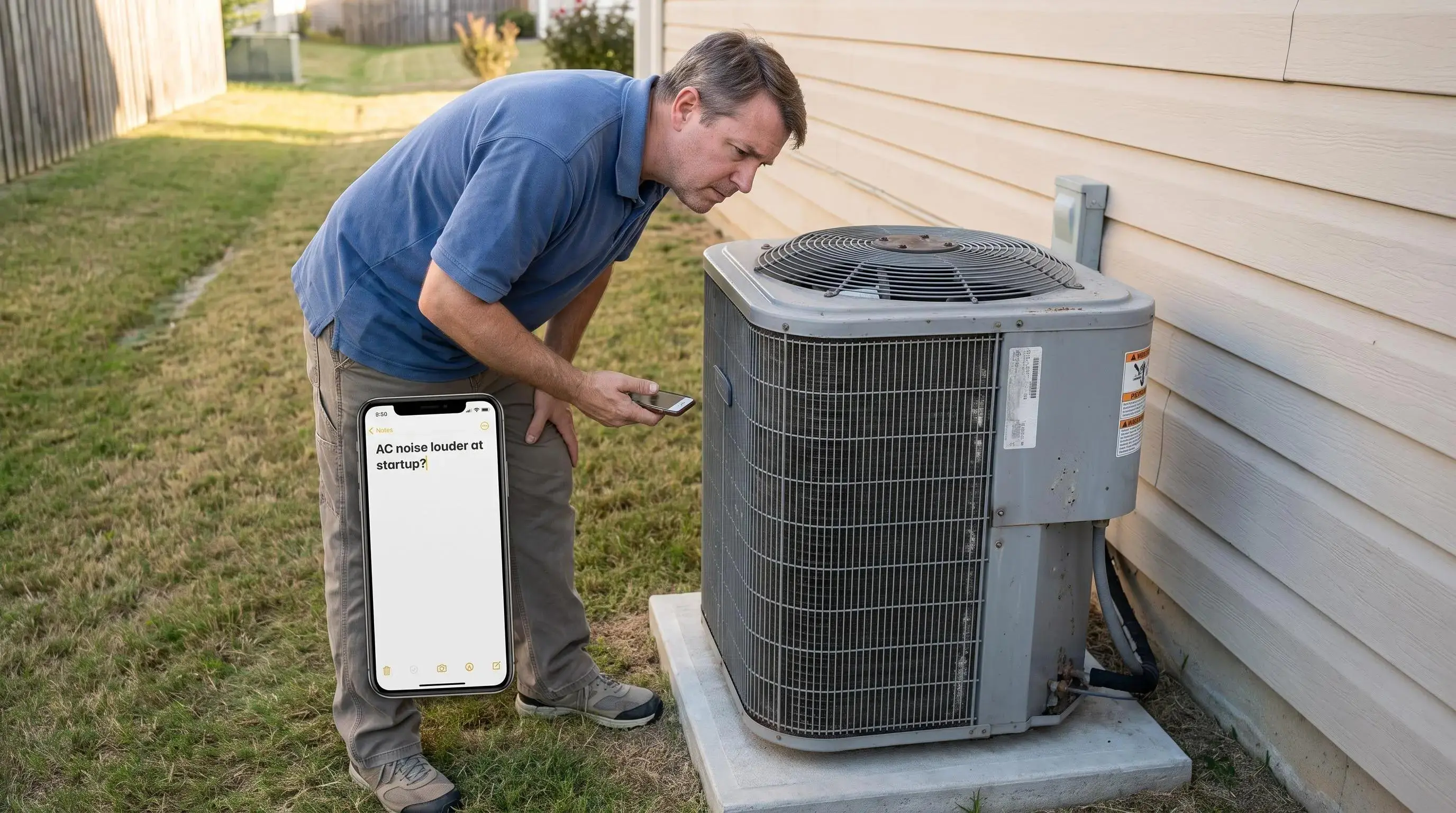
There are a few low risk things you can do yourself before scheduling AC noise repair. Keep them simple. You’re narrowing the problem, not trying to solve it on your own.
First, turn the thermostat off.
Then check the basics:
- inspect the air filter and replace it if it’s visibly dirty
- look at supply vents and return grilles for obvious blockage
- see whether anything nearby is vibrating against the indoor cabinet
- inspect around the outdoor unit for leaves, twigs, or small debris
- check whether the outdoor unit looks level and stable on its pad
A dirty filter is a common one. Restricted airflow can change the sound of the blower and make the system work harder than it should. We’ve seen people worry about motor failure when the filter was the real problem, and we’ve seen the opposite too. That’s why you check, not assume.
After those steps, turn the system back on and listen again. Did the sound change? Stay the same? Get worse?
Write that down. It helps.
What Not to Do When Your Air Conditioner Is Making Noise
This is the part where a lot of people make the problem more expensive.
Do not open the electrical compartment. Do not try internal repairs. Air conditioners have high voltage components and pressurized refrigerant. One wrong move can injure you, damage the system, or create warranty trouble later.
Also, don’t keep restarting a unit that’s clicking without starting, humming in place, banging, or grinding. Repeated restart attempts are hard on motors, compressors, and electrical parts.
Skip these ideas:
- reaching into the outdoor fan area
- bending panels back by hand while the unit is energized
- trying internet fixes for capacitors, motors, or compressor issues
- swapping parts based on a guess
DIY trial and error usually costs more. It can hide the original failure, damage other components, and turn a straightforward repair into a messy one.
When to Call for Professional AC Noise Repair
If the noise is new, getting louder, coming back after a filter change, or showing up with weaker cooling, it’s time to call. That’s the clean decision point.
Professional diagnosis matters most when you’re dealing with:
- electrical buzzing
- repeated clicking air conditioner problems
- a squealing AC unit
- a banging noise from AC equipment
- grinding indoors or outdoors
- hissing that may involve refrigerant
For Austin area homes and businesses, our AC Repair service is the right next step when the goal is to diagnose the existing system and get cooling restored. We handle residential and commercial AC problems, and fast response matters when the noise is tied to poor cooling or a full breakdown.
We think licensed, insured, certified technicians and transparent pricing matter here for a reason. Noise complaints can be minor, or they can be early signs of compressor, motor, or electrical failure. Guesswork is not a plan.
If you’re running a business and the noise is affecting staff comfort, customer areas, or temperature sensitive operations, Commercial HVAC Services is usually the better fit than a standard residential call.
When Noise Suggests Repair Is Enough and When Replacement Enters the Conversation
Most noisy AC systems do not need replacement. That’s worth saying plainly.
A lot of sounds come from fixable issues: debris, loose panels, worn motors, blocked drains, dirty filters, or isolated electrical parts. Those are repair conversations, not replacement ones.
Replacement starts to enter the picture when the noise points to major compressor trouble, the system keeps breaking down, or cooling performance stays poor after meaningful repair history. At that point, you’re not just fixing one part. You’re deciding whether the system still makes sense.
Compressor warning signs are the ones we take seriously:
- warm air from the vents while cooling is on
- loud grinding, squealing, or clicking during operation
- oily residue around the compressor area
A technician should look at the whole picture: age of the system, repair cost, overall cooling performance, and whether the issue is isolated or part of broader decline. A noisy old system with poor cooling and repeat repairs is a different conversation from a newer unit with one failed motor.
If inspection shows replacement is the smarter path, that’s where AC Installation makes sense. Not before.
How to Prevent Loud AC Noises From Coming Back
Noise prevention is cheaper than emergency repair. It’s also less stressful, especially in the middle of summer.
Most loud AC sounds start small. Dirt builds up. Hardware loosens. Filters clog. Drains back up. Motors wear gradually. The machine usually gives you a warning before it gives up.
A few habits go a long way:
- change filters on schedule
- keep the outdoor area clear
- pay attention when the system sounds different
- don’t skip seasonal checkups before peak cooling demand
Our Air Conditioning Maintenance service fits here because preventive inspections can catch refrigerant issues, blower wear, thermostat problems, coil buildup, and other conditions that often announce themselves with noise before they show up as full cooling failure.
Treat new sounds like early warning signals, not background irritation. That’s the difference between a controlled repair and a bad day.
Conclusion
An air conditioner making noise is not always a crisis, but it is rarely random. The type of sound, where it comes from, and whether the system is still cooling properly usually tell you what you’re dealing with.
A light startup click or steady hum may be fine. Banging, grinding, persistent buzzing, continuous hissing, or repeated startup failure is a different story.
Do the safe checks. Skip the risky DIY. Act quickly when the sound points to mechanical, electrical, or refrigerant trouble.
If the noise is getting worse or your system isn’t cooling the way it should, schedule a licensed inspection promptly. In Austin, waiting on a loud AC problem is how a repair turns into a shutdown.