by
by 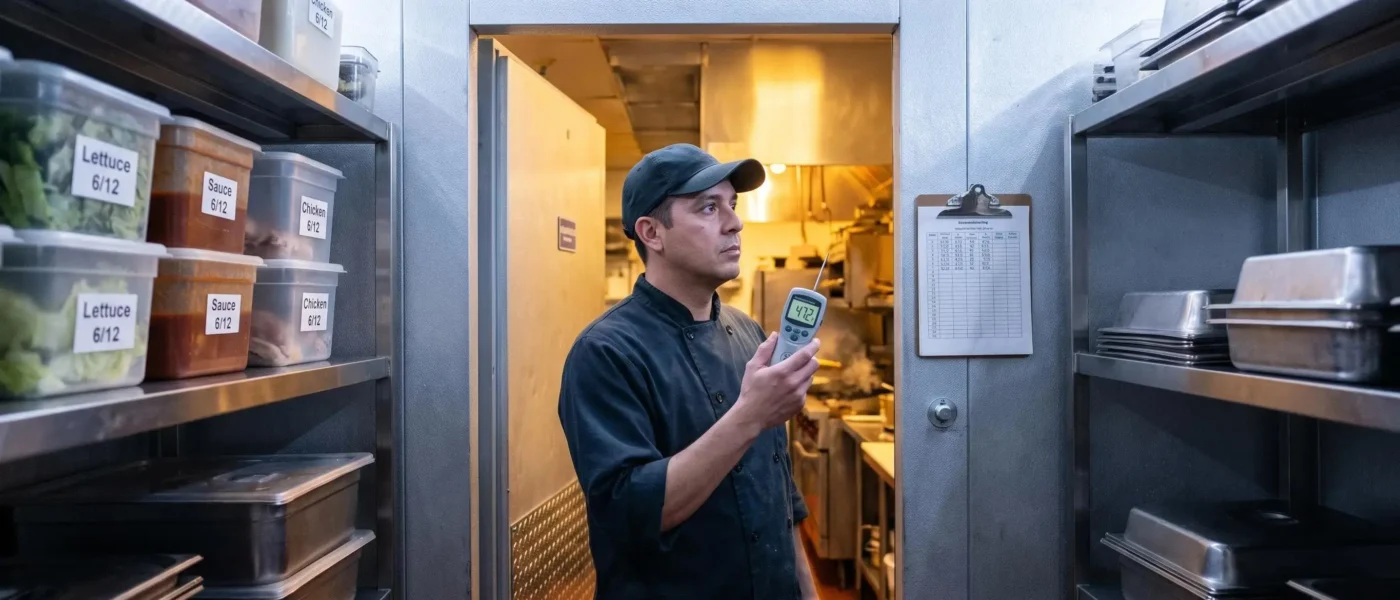
Commercial refrigeration repair Austin calls usually start with one bad sign: a cooler creeping warm during a lunch rush, frost sealing up an evaporator, water spreading across the floor.
Move product, stop opening doors, and get the real symptoms ready for the technician. Don’t keep resetting a tripped breaker; that can turn a contained problem into a longer outage.
Watch for these early clues:
- Cabinet temperature rising despite a running compressor
- Fans silent, loud, or scraping behind ice buildup
- Water pooling near drains, doors, or electrical connections
Protect the inventory. Restore the cold.
Why Urgent Commercial Refrigeration Failures Escalate So Fast
When refrigeration goes down in a business, the clock starts immediately. This isn’t like a comfort cooling issue where people get annoyed and wait a few hours. Product temperature starts drifting, staff starts improvising, and the whole day can come apart faster than most owners expect.
In Austin, heat makes the margin for error smaller. A reach-in that struggles during a slow morning can become a real problem by lunch. A walk-in that gets opened every couple of minutes during service won’t hold on for long. Once that cold buffer is gone, you’re not just fixing equipment anymore. You’re protecting inventory, food safety, customer experience, and your team’s ability to keep moving.
Here’s the chain reaction we see operators worry about most:
- Product warms past safe holding range
- Staff starts shifting items into whatever backup space exists
- Line speed drops because people can’t trust what they’re pulling
- Customers wait longer or get told certain items are unavailable
- Managers start thinking about waste, refunds, and code issues at the same time
That pressure is real. So is the frustration. You’re trying to make decisions while people keep asking what to do next.
Urgent does not have to mean chaotic, but it will if nobody takes control early.
The best response is simple and fast: protect product, limit temperature loss, gather useful symptoms, and get emergency refrigeration repair moving before the situation becomes a full spoilage event. You do not need perfect information in the first ten minutes. You need a steady hand.
What Counts as an Emergency Refrigeration Repair
Not every refrigeration issue is an emergency. Some are maintenance problems that need attention soon. Others are active business threats. The difference matters, because you don’t want to treat a failing prep table during lunch the same way you’d treat a worn gasket you noticed during closing.
A true emergency refrigeration repair usually looks like one of these:
- A walk-in cooler or freezer is no longer holding a safe temperature
- A reach-in refrigerator starts warming during business hours
- A prep table or line cooler fails in the middle of service
- An ice machine goes down and disrupts beverage or kitchen operations
- Water is leaking around the unit and creating a slip risk
- Heavy frost or icing is choking airflow and the box stops cooling normally
- The unit trips breakers, makes unusual noise, or runs without actually cooling
Those are same-day problems. If scheduling allows, same day refrigeration repair is the standard you should expect for situations like that.
Some issues are serious without being immediate emergencies:
- Worn door gaskets that still seal most of the time
- Gradual efficiency loss
- Light condensation that isn’t spreading
- A unit that still holds temperature but runs longer than it used to
Don’t misunderstand that. “Not an emergency” doesn’t mean “ignore it.” It means you still have some control over timing.
A useful rule is this: if the problem threatens safe temperatures, service continuity, or onsite safety today, treat it like an emergency. If it mostly points to future failure, book it before it becomes today’s crisis.
Which Austin Businesses Most Often Need Fast Commercial Refrigeration Repair
A lot of different businesses search for commercial refrigeration repair Austin, but the urgency usually comes from the same place. They need stable temperatures back fast, and they don’t have time to sort out the exact mechanical term first.
The calls most often come from:
- Restaurants
- Bars and coffee shops
- Grocery and convenience stores
- Retail businesses with display coolers
- Commercial kitchens
- Property managers handling tenant spaces or shared equipment areas
Restaurant refrigeration service tends to be the most time-sensitive. Those units get opened constantly, loaded hard, and judged every hour by what comes out of them. A line cooler that is slightly off in a quiet shop can become a real service problem in a kitchen turning tickets quickly. Door openings, hot pans, fresh deliveries, and heat from nearby cooking equipment all pile onto the same system.
The equipment behind most urgent calls is pretty consistent:
- Walk-in coolers
- Walk-in freezers
- Reach-ins
- Chef bases and prep tables
- Undercounter coolers
- Display cases and merchandisers
- Ice machines
Property managers are a little different. They may not know whether they need a walk in cooler technician, an electrician, or broader building support. Fair enough. If multiple units are struggling at once, or if ambient heat in the space is out of control, the issue may connect back to a larger building condition instead of one isolated cabinet.
That is why “business cooler repair Austin” searches are often blunt. People are not trying to win a vocabulary test. They just need the cold side of the operation stable again.
The Most Common Problems Behind Urgent Breakdowns
Most emergency failures do not come out of nowhere. They usually come from a smaller problem that finally ran out of room to hide. Then it shows up all at once as warm product, ice buildup, or a unit that won’t recover.
The top complaint is simple: temperature inconsistency or total cooling loss. But the root cause can sit in a few different places.
Common causes include:
- Defrost system failures
- Airflow restrictions
- Dirty or blocked coils
- Fan motor failures
- Faulty thermostats or controls
- Damaged door seals and gaskets
- Drain line clogs and water leakage
- Compressor-related problems
- Refrigerant issues that need certified handling
Here’s where owners get tripped up. The visible symptom is not always the real problem. Frost on the evaporator may look like the issue, but the deeper cause could be failed defrost timing, poor airflow, or a fan that stopped doing its job. Water on the floor may point to a drain blockage, or it may be telling you the system has been icing and thawing unevenly for a while.
A good commercial refrigeration repair Austin visit should chase the cause, not just knock down the symptom.
Short-term fixes have a way of getting expensive. A reset, a thaw, or a quick patch can buy a few hours, maybe a few days. Then the same unit fails again during a busier shift, when the product load is heavier and patience is thinner. One solid diagnosis usually costs less than three hurried bandages.
What to Do in the First 15 Minutes After a Commercial Unit Fails
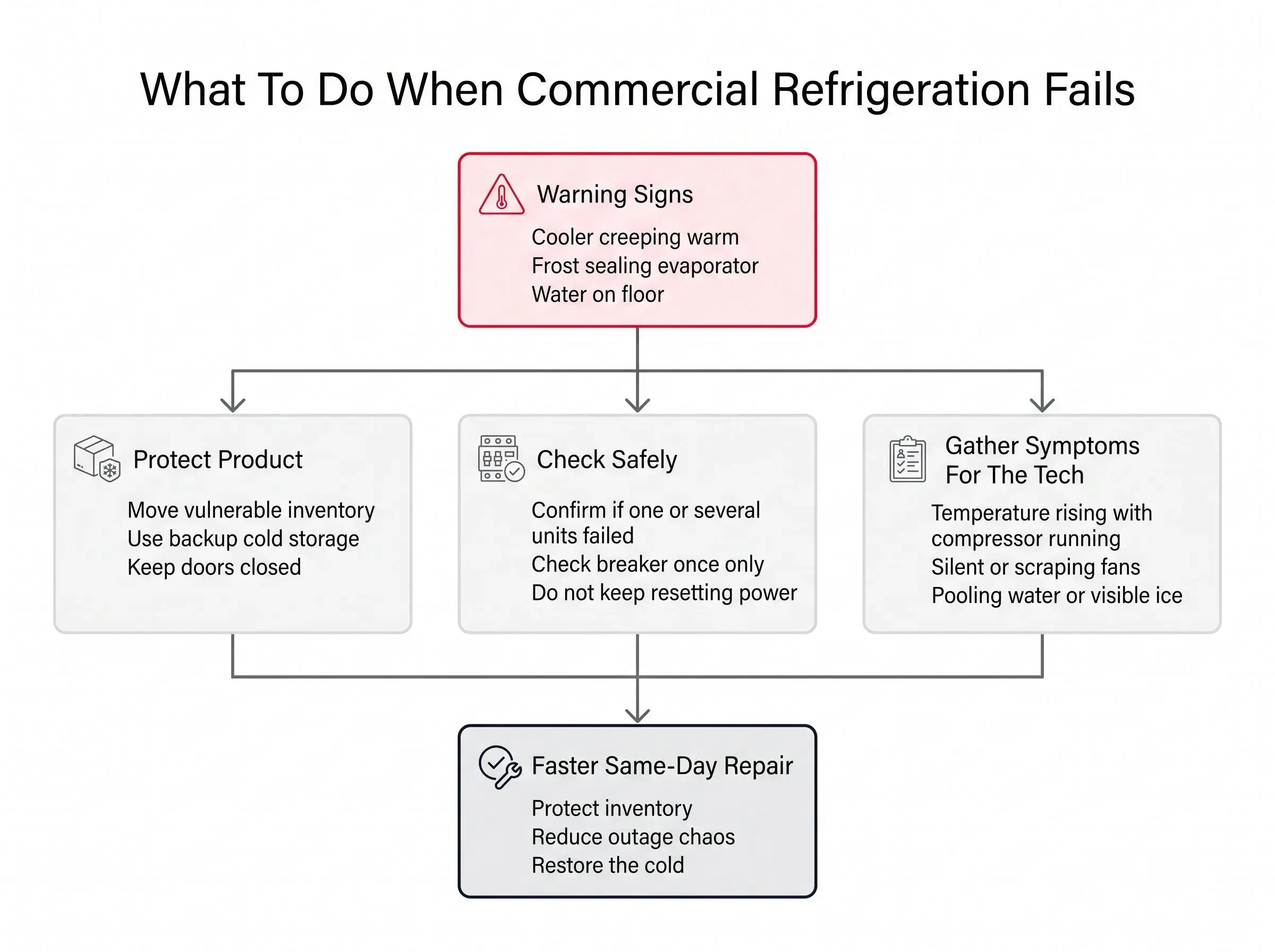
The first few minutes matter more than people think. Not because you’re going to repair the system yourself, but because the way you respond can protect product and make the technician’s job faster once they arrive.
Start with triage.
Immediate response
- Protect inventory
Move the most vulnerable product to backup cold storage if you have it.
- Minimize door openings
Keep doors closed as much as possible.
- Assess the scope
Figure out whether one unit failed or several.
- Check power issues
Check for obvious electrical issues like a tripped breaker.
- Call for service
Call for emergency refrigeration repair early.
A few practical notes make a difference here.
Prioritize what you move. High-value proteins, dairy, and anything with stricter temperature risk should go first. Don’t waste ten minutes reorganizing low-risk items while expensive inventory warms up on a rack.
Then look and listen. Write down or photograph what you see:
- Error codes on the controller
- Frost pattern on the coil or back wall
- Water pooling underneath
- Loud buzzing, clicking, or grinding
- Warm zones in one part of the cabinet
- Fans that should be running but aren’t
If a breaker tripped, confirm it once. Repeated resets without a diagnosis can make a bad problem worse. If it trips again, stop.
Also note the timeline. When did staff first notice the issue? Was there a power interruption? Did a large delivery just go in? Was the unit cleaned recently? Did the kitchen or room feel hotter than normal today? Small details like that often shorten diagnosis.
If more than one unit is affected, step back. You may be dealing with a broader power, ventilation, or building cooling issue. In that case, Commercial HVAC Services can become relevant, especially in facilities where ambient heat and airflow push refrigeration systems harder than they should.
What Same-Day Commercial Refrigeration Repair in Austin Should Look Like
Speed matters, but speed without a usable diagnosis is just motion. Good same day refrigeration repair means the dispatch is quick, the intake is sharp, and the tech arrives prepared to do more than confirm the obvious.
A strong urgent service call usually includes a few signs right away:
- Fast dispatch or a realistic arrival window
- Licensed and insured technicians
- Clear pricing before repair work starts
- Trucks stocked for common failure items
- Intake questions about unit type, symptoms, and temperature status
If the office only asks for your address and says “someone will take a look,” that is not a great sign. A good team wants details before they roll because the difference between a walk-in freezer and a prep table is not cosmetic. It affects tools, parts, and the first plan of attack.
Useful communication should feel straightforward:
- They confirm when they can get there
- They ask what kind of unit failed
- They ask whether it’s cooling at all, icing up, leaking, or tripping power
- Once onsite, they explain what they found in plain language
- If the repair is larger than expected, they say so clearly
At Fuse ATX, same-day service is part of how we operate when scheduling allows, because businesses usually don’t have the luxury of waiting two or three days on a refrigeration problem. That said, quick arrival is only half the job. If the truck isn’t prepared and the diagnosis is loose, you lose another service window. That’s the expensive part.
How a Skilled Walk-in Cooler Technician Diagnoses the Problem
There is a real difference between troubleshooting and guesswork. In refrigeration, that difference usually shows up in whether the unit stays fixed after the first visit.
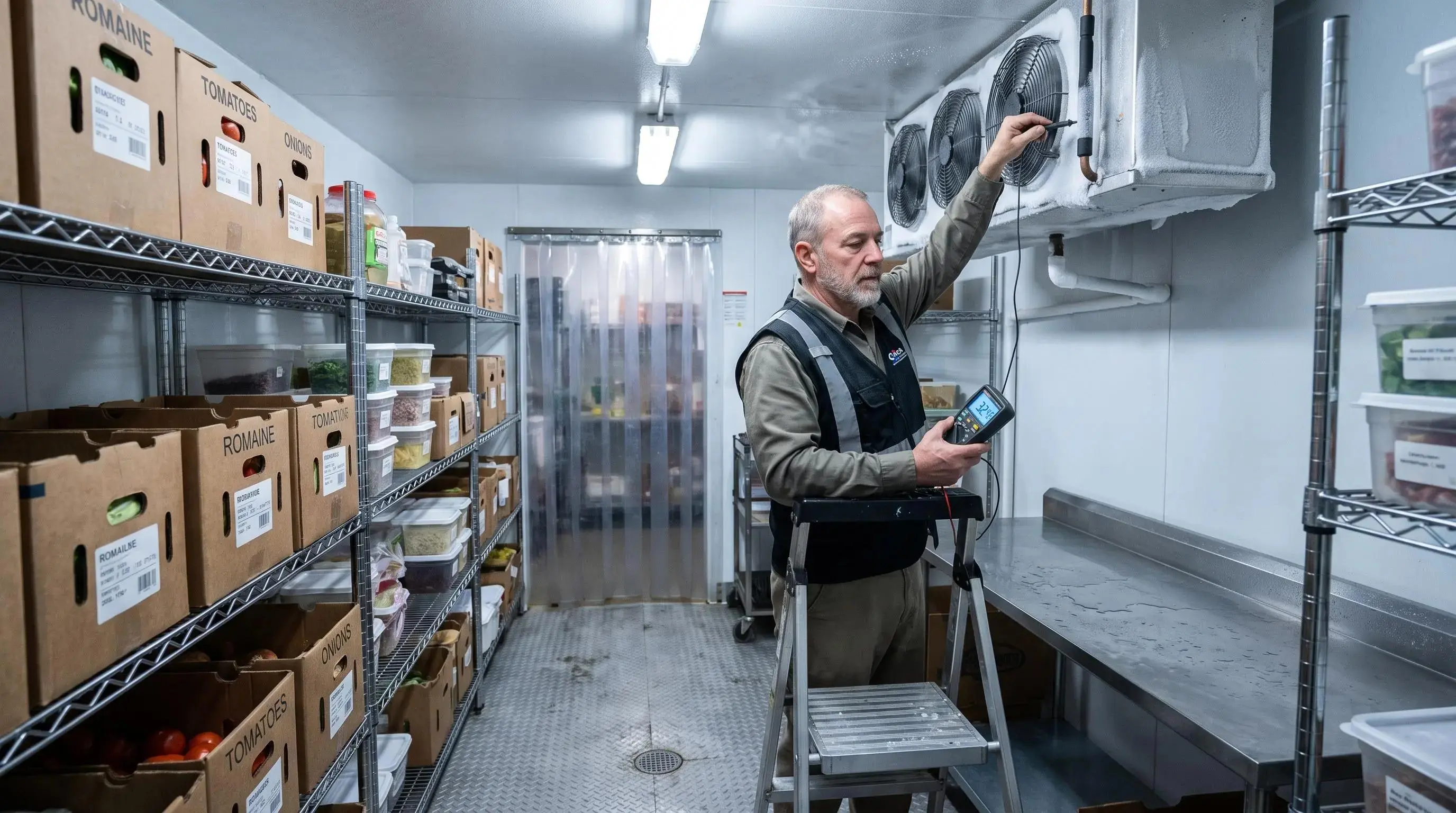
A capable walk in cooler technician doesn’t stop at “it’s running again.” They work through the system in a way that explains why it failed and whether anything else is about to follow.
A proper diagnosis often includes:
- Confirming actual cabinet temperature, not just trusting the display
- Checking airflow and evaporator fan operation
- Inspecting evaporator and condenser coils
- Looking at door seals and door closing
- Reviewing controls, sensors, and defrost timing
- Checking for icing, blocked drains, and frost patterns
- Measuring operating pressures and system performance
You’ll sometimes hear terms like superheat, subcooling, defrost cycle, amperage draw, or compressor strain. Those aren’t there to impress you. They help the technician verify whether the refrigeration system is balanced and behaving correctly under load.
That last part matters. Plenty of units can be restarted. Fewer are actually tested well after repair.
If the box cools for twenty minutes but the system is still out of balance, the breakdown is only postponed.
For owners and managers, the goal is not a temporary rebound. The goal is safe holding temperatures, stable pull-down, and fewer repeat failures. If a technician can’t explain what failed, what they checked around it, and whether the unit is now operating normally, keep asking.
Austin-Specific Repair Considerations That Matter During an Emergency
During an emergency, people want the fastest possible fix. That’s understandable. But speed does not cancel compliance, especially when refrigerant work is involved.
In Austin, some self-contained refrigeration repairs can move faster because certain units may be exempt from a building permit if they contain 10 pounds or less of refrigerant or use motors of 1 horsepower or less. That can help on some service calls. It does not mean every repair is exempt, and it definitely does not mean other code requirements disappear.
A few practical points are worth keeping in mind:
- Permit exemption depends on the type of unit and its specs
- Exemption does not waive city code or building code requirements
- Refrigerant work should be handled by technicians with proper EPA credentials, often called EPA 608 or Universal EPA certification
This is not legal advice. It’s operating advice.
If a repair requires refrigerant handling, asking about credentials during dispatch is reasonable. If the equipment is larger, not self-contained, or heading toward major replacement, the path may be slower than a simple service call. Better to know that up front than get surprised halfway through a failed repair attempt.
Repair vs Replacement When the Clock Is Against You
This is where pressure makes people overcorrect. Some approve a replacement too early because the breakdown feels catastrophic. Others keep repairing a bad unit because they are staring at today’s invoice instead of next month’s downtime.
Repair is usually the right move when the issue is isolated and the rest of the system is still sound. A failed fan motor, control problem, defrost issue, or drain problem often falls into that category if the unit can be restored cleanly and tested properly.
Replacement or major upgrade starts making more sense when you have:
- Repeated breakdown history
- Compressor or other major system failure
- Old equipment near the end of service life
- Mounting labor costs and recurring product loss
Don’t judge this only by the repair estimate. Think about the real operating cost:
- Inventory exposure
- Interrupted service
- Staff time spent working around the failure
- The risk of reopening on a unit that may fail again next week
Sometimes the expensive option is the one that looked cheaper this morning.
For larger qualifying HVAC-related projects, financing can ease the pressure a bit when a business needs to act before cash flow catches up. That doesn’t make replacement the default. It just keeps the decision from being cornered by timing alone.
How to Choose the Right Commercial Refrigeration Repair Company in Austin
When you’re booking under pressure, it helps to have a short filter. Not a perfect process. Just a solid one.
Use this checklist:
- Same-day availability for urgent failures
- Real commercial refrigeration experience
- Ability to work on walk-ins, reach-ins, prep tables, freezers, display units, and ice machines
- Licensed and insured status
- Transparent pricing
- EPA refrigerant credentials where needed
- Clear communication during intake
Ask direct questions before you book:
- Have you worked on this type of unit before?
- Can you handle urgent restaurant refrigeration service?
- Do your technicians carry common parts for first-visit repairs?
- What information do you need from me right now to speed dispatch?
One more thing. A provider who understands both refrigeration equipment and broader building systems can be a better fit when the problem may connect to airflow, heat load, or electrical issues outside the cabinet itself. That happens more often than people think.
At Fuse ATX, we serve Austin businesses with licensed technicians and same-day service options, but we’d tell you the same thing even if you were evaluating anyone else: judge the call by how they think, not just how fast they answer.
How to Reduce the Odds of the Next Emergency
Most emergencies leave clues first. Operators are busy, so those clues get pushed to tomorrow until tomorrow becomes a warm cooler at 2 p.m.
Watch for the early stuff:
- Dirty coils
- Worn gaskets
- Drain backups
- Fan noise
- Inconsistent cabinet temperatures
- Slow pull-down after loading
You do not need a complicated program to catch these. A simple routine works if somebody actually owns it.
Keep a short internal check
- Log temperatures at regular times
- Look for new frost, leaks, or sweating
- Check that doors close fully
- Keep coils and nearby airflow areas clean
- Escalate quickly when a unit starts struggling
This is continuity planning more than maintenance theater. The goal isn’t perfection. It’s catching the failure while it is still cheap and boring.
If a facility also has broader cooling or airflow issues, planned support on the HVAC side can help reduce added strain on refrigeration equipment. In that context, Air Conditioning Maintenance may fit into the wider building routine. It is not a substitute for refrigeration repair, but it can matter when overheated spaces and poor airflow keep pushing cold equipment past its comfort zone.
Conclusion
Urgent refrigeration failures are operational emergencies. They hit inventory, safety, staff flow, and customer service all at once. But they are far more manageable when you know what to do in the first few minutes and what good same-day service should actually look like.
The next steps are straightforward:
- Protect product first
- Keep doors closed
- Gather useful symptom details
- Ask about commercial experience and refrigerant credentials
- Move quickly on emergency refrigeration repair
That is the difference between reacting blindly and managing the problem.
If you need commercial refrigeration repair Austin businesses can call when time matters, the best local partner is the one that can think clearly under pressure, explain the issue honestly, and help you get from threat to solution with less guesswork. That’s how a bad day stays a repair event instead of turning into a much bigger mess.